
Article: The Sacred Rain, What It Does to the Land, and 5 Foods That Love Your Gut- Sawan in India
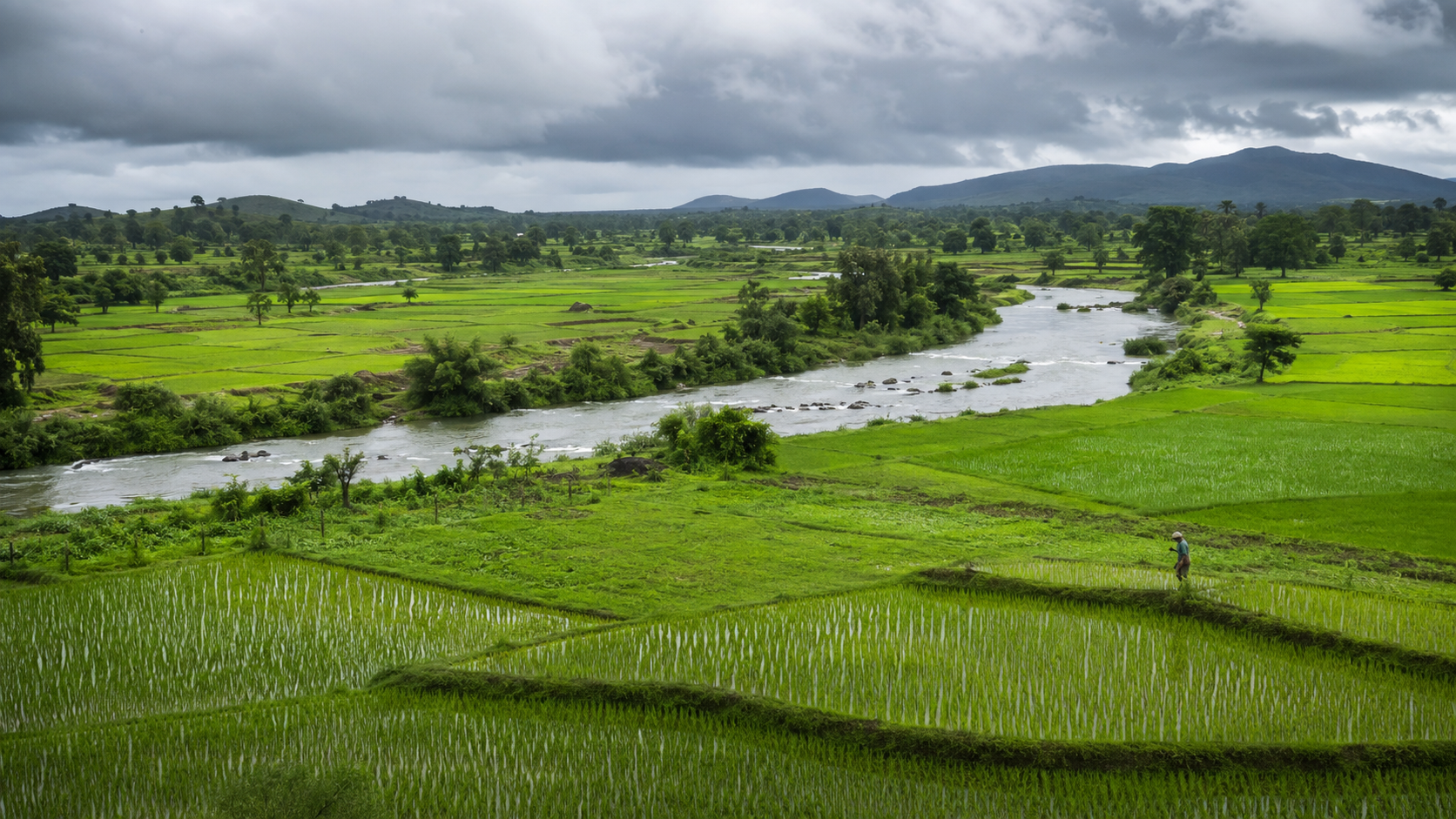
The Sacred Rain, What It Does to the Land, and 5 Foods That Love Your Gut- Sawan in India

There's a particular smell that hits Indian streets the moment the first Sawan cloud bursts — wet earth, marigold, and something faintly electric in the air. Old-timers call it mitti ki khushboo. Scientists call it petrichor. Either way, it means one thing: the holiest month on the Hindu calendar has arrived, and with it, a whole season of rituals, green bangles, khichdi, and — if you're not careful — a stomach that rebels against everything you eat.
Sawan (also spelled Shravan) usually falls between late July and August, and it's not just another monsoon month. It's the month Shiva devotees wait for all year.
Why Sawan Is Sacred

In Hindu mythology, Sawan is dedicated to Lord Shiva. The most common origin story traces back to the Samudra Manthan — the churning of the cosmic ocean by gods and demons in search of amrit, the nectar of immortality. Along with the nectar came halahal, a poison lethal enough to destroy all creation. Shiva, to protect the universe, drank it and held it in his throat rather than letting it pass further — which is why he's depicted with a blue throat and known as Neelkanth. The story goes that the churning happened during Sawan, and to soothe the effects of the poison, devotees began offering him cool water and milk during this month — a practice that continues today as the Kanwar Yatra, where lakhs of pilgrims carry holy Ganga water on foot to Shiva temples, often walking hundreds of kilometres barefoot.
Every Monday in Sawan — called Sawan Somwar — is treated as especially auspicious. Fasting on these days, offering bel patra (bael leaves), milk, and water to the Shivling, and visiting temples like Kashi Vishwanath, Mahakaleshwar, or the Neelkanth shrines is deeply woven into the month. Unmarried women often observe Sawan Somwar vrat hoping for a good match, drawing on the belief that Parvati's penance to win Shiva took place during this season.
The month also carries Teej — a festival where married and unmarried women dress in green, apply mehendi, swing on flower-decked jhulas, and pray for marital happiness and their husbands' wellbeing. Green isn't a random colour choice here; it mirrors the season itself, the freshly sprouted paddy fields, and is considered symbolic of fertility, new beginnings, and prosperity.
What Sawan Does to the Land

Step outside during Sawan and you can practically watch the transformation happen in real time.
Rivers and reservoirs fill up. India's agriculture depends on the southwest monsoon for nearly 70% of its annual rainfall, and by Sawan, the season is usually at its peak. Dams that looked worryingly low in May start touching capacity.
The soil turns fertile again. After months of dry heat, rain rehydrates the topsoil, breaks down organic matter faster, and kickstarts a burst of microbial activity that farmers depend on for the kharif sowing season — rice, maize, cotton, sugarcane, and pulses all go into the ground around this time.
Forests and grasslands turn a shade of green that simply doesn't exist the rest of the year. This is peak season for anyone chasing waterfalls in the Western Ghats or the hill trails of the Northeast — everything from moss on rocks to entire hillsides responds to the rain within days.
But it's not without its costs. Sawan also brings flash floods, waterlogged cities, landslides in hilly states, and a spike in vector-borne illnesses like dengue and malaria as stagnant water becomes mosquito breeding ground. It's a season of abundance and a season you have to respect.
Why Your Gut Struggles in Monsoon — and 5 Foods That Help

Ayurveda has always treated monsoon as a season where digestion (agni) weakens. Humidity slows the body down, water sources get contaminated more easily, and the temptation to eat piping hot pakoras every time it rains doesn't exactly help matters. The result: bloating, acidity, and a gut microbiome that's more sensitive than usual.
Here are five foods worth leaning on this Sawan — not fads, just what's traditionally eaten in Indian households for exactly this reason.
1. Moong Dal — Light, Warm, and Easy on Digestion
Split yellow moong dal is considered the easiest legume to digest in Ayurveda. It's low in the heavier compounds that cause bloating and is often the first food recommended when the gut needs a reset. Cooked into a thin, well-spiced khichdi with ghee, it becomes a complete, gut-friendly meal — the full recipe is below.
2. Fresh Curd and Buttermilk (in moderation, at the right time)
Curd's probiotic bacteria support gut flora, but Ayurvedic wisdom is specific about monsoon: have it fresh, at room temperature, and preferably as chaas (buttermilk) with roasted cumin and a pinch of black salt rather than a large bowl of curd at night. It aids digestion without adding excess moisture to an already damp season.
3. Ginger, Ajwain, and Jeera — The Monsoon Trinity
These three show up in almost every monsoon home remedy for a reason. Ginger stimulates digestive enzymes, ajwain (carom seeds) is a classic fix for gas and bloating, and jeera (cumin) supports overall gut motility. A simple decoction of all three with tulsi, sipped warm through the day, is as close to a monsoon ritual as tea itself.
4. Seasonal, Well-Washed Fruits — Pomegranate, Jamun, and Pears
Monsoon fruit needs a little more care (thoroughly washed, ideally peeled), but jamun in particular is prized in Ayurveda for supporting blood sugar balance and digestion, while pomegranate offers gut-friendly polyphenols. Skip the roadside cut-fruit stalls this season and wash everything at home.
5. Roasted Makhana and Steamed Snacks Over Deep-Fried Ones
The rain-and-pakora combination is basically an Indian cultural reflex, but oily fried snacks are the hardest on a monsoon-weakened gut. Roasted makhana (fox nuts) tossed with a little ghee, black pepper, and rock salt gives you that same warm, snacky comfort with fibre and none of the heaviness — steamed dhoklas or idlis do the same job for a full meal.
Recipe: Comforting Moong Dal Khichdi for the Monsoon

This is the dish Indian mothers reach for the moment the sky turns grey — light on the stomach, warm, and endlessly comforting.
Ingredients (serves 4):
- 1 cup split yellow moong dal (washed)
- ½ cup rice (washed)
- 2 tbsp ghee
- 1 tsp cumin seeds (jeera)
- ½ tsp ajwain (carom seeds)
- A small piece of ginger, grated
- 1 green chilli, slit (optional)
- ½ tsp turmeric powder
- A pinch of asafoetida (hing)
- 4½ cups water
- Salt to taste
- Fresh coriander, chopped, to garnish
Method:
- Heat the ghee in a deep pot. Add cumin seeds and ajwain, and let them sizzle for a few seconds.
- Add the grated ginger, green chilli, and hing. Sauté for 30 seconds until fragrant.
- Add the washed moong dal and rice, and stir for a minute so they're coated in the tempering.
- Add turmeric, salt, and water. Bring to a boil, then reduce heat and simmer, partially covered, for 20–25 minutes, stirring occasionally, until the dal and rice break down into a soft, porridge-like consistency.
- Adjust water for a thinner or thicker khichdi depending on preference — monsoon khichdi is best a little soupy.
- Finish with a spoon of ghee on top and fresh coriander. Serve hot, with a side of curd or buttermilk if your digestion is up for it.
What to Wear When Sawan Won't Let Up

Ask any Indian woman what monsoon does to her wardrobe and she'll tell you: it's chaos. Heavy silks cling and stain, synthetic fabrics trap sweat in the humidity, and anything with delicate embroidery is a nightmare to dry. The one fabric that consistently works through Sawan is handloom cotton — it breathes, dries quickly, and only gets softer with every wash and monsoon downpour it survives.
Green also isn't just a Teej colour by coincidence — it's the colour of the season itself, of new paddy shoots and washed leaves, which is partly why it dominates monsoon wardrobes across India. If you're building a Sawan-ready edit, two handloom cotton sarees from Huts and Looms are worth a look:
Iraaya — Green Handloom Checkered Cotton Saree

A crisp checkered weave in a fresh green that does double duty for Sawan Somwar visits and Teej. Pure handloom cotton means it stays cool and breathable even on the mugginest days, and the checks keep it from looking too formal for everyday wear. Rs. 2,850 (34% off).
Sohini — Bottle Green Handloom Cotton Saree with Golden Striped Border

A deeper bottle-green with a golden striped border for when the occasion calls for a little more festivity — temple visits, family Teej gatherings, or an evening aarti. Still pure cotton underneath the shine, so comfort isn't traded for the gold border. Rs. 2,300 (39% off).
Both are easy to pair with a simple sleeveless or elbow-length blouse, minimal jewellery, and — because it's Sawan — an umbrella that matches nothing and everything at once.
A Few Monsoon Reminders
Sawan asks a little more of you than most months — care in what you eat, care in what you wear, and, if you're so inclined, a little devotion tossed in. But it also gives back generously: green fields, cooler evenings, and a kind of collective national exhale after the summer heat finally breaks.
Whatever your Sawan looks like this year — a Kanwar Yatra, a Teej swing under the neem tree, or just a bowl of khichdi by the window watching the rain — may it be a gentle one.
Have a monsoon food habit or family Sawan ritual that didn't make this list? It probably deserves its own blog post — feel free to send it our way.